
Introduction to how to layer skincare actives
Understanding how to layer skincare actives can make your routine easier and help reduce unnecessary irritation. Ingredients such as niacinamide, azelaic acid, retinol, salicylic acid, tranexamic acid, and vitamin C can target different concerns. However, using too many strong products at once may leave your skin dry, sensitive, or irritated.
The good news is that you do not need every active ingredient in one routine. For how to layer skincare actives, you can choose products based on your main skin concern and introduce them gradually.
In this guide, we explain how to layer skincare actives, which ingredients work well together, and which combinations may be better used at different times.
What Are Skincare Actives?
Skincare actives are ingredients formulated to target specific skin concerns. Depending on the ingredient, they may help with acne, dark spots, uneven skin tone, clogged pores, texture, or signs of ageing.
Common skincare actives include:
- Niacinamide
- Azelaic acid
- Salicylic acid
- Retinol and retinal
- Tranexamic acid
- Alpha arbutin
- Vitamin C
- Glycolic acid
Although these ingredients can be useful, more is not always better. A simple routine that your skin tolerates is often easier to maintain.
How to Layer Skincare Actives in the Correct Order
A simple rule is to apply products from lighter to thicker textures while following the directions for each individual product.
A basic morning routine may look like this:
- Cleanser
- Toner, if needed
- Treatment serum
- Moisturizer
- Sunscreen
An evening routine may look like this:
- Cleanser
- Toner or exfoliant, if being used
- Treatment serum
- Retinoid or other treatment, depending on your routine
- Moisturizer
However, you do not need several active steps every morning and evening. If your skin becomes irritated, simplify your routine.
Niacinamide and Azelaic Acid: Can You Use Them Together?
Yes. Niacinamide and azelaic acid can generally be used in the same skincare routine.
Niacinamide helps support the skin barrier and improve uneven-looking skin tone. Meanwhile, azelaic acid can help with acne, redness, and post-acne marks.
For example, you can apply a niacinamide serum followed by an azelaic acid product if the textures work well together. Alternatively, use one in the morning and the other at night.
If you’re deciding between these two ingredients, read our Niacinamide vs Azelaic Acid guide for a detailed comparison.
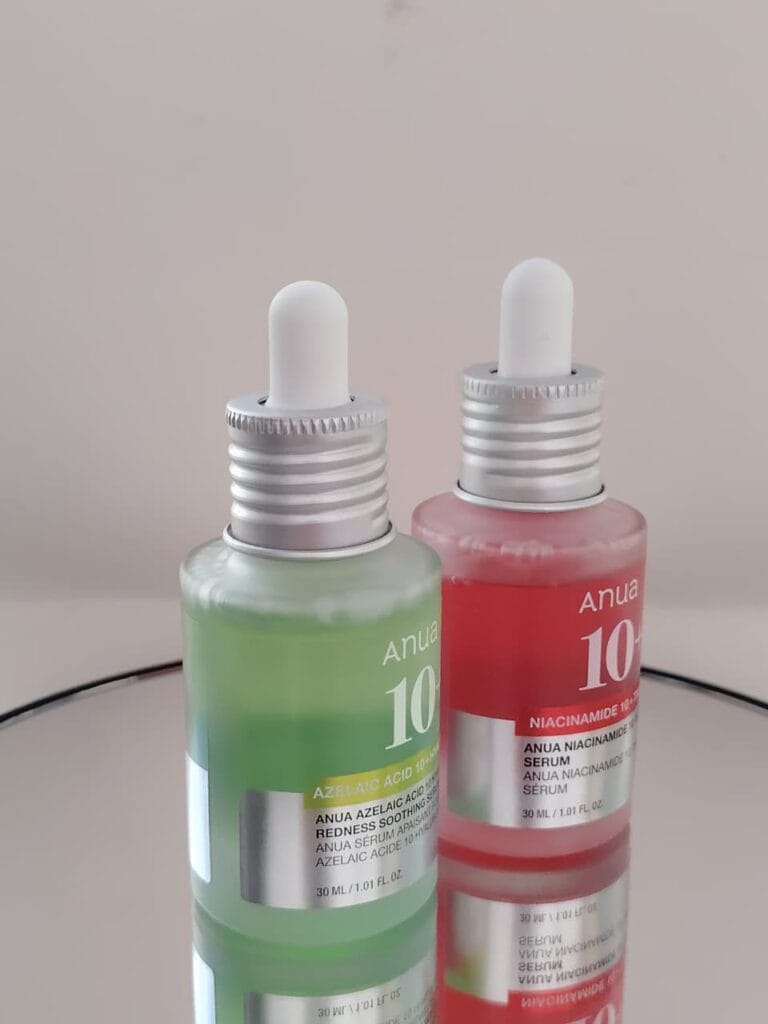
Tranexamic Acid and Niacinamide: Can You Layer Them?
Yes. Tranexamic acid and niacinamide are commonly combined in skincare products aimed at uneven skin tone and dark spots.
Tranexamic acid targets the appearance of pigmentation, while niacinamide can help improve uneven tone and support the skin barrier.
This combination may be particularly useful if post-acne marks and uneven skin tone are your main concerns.
Alpha Arbutin and Tranexamic Acid: Can You Use Both?
Yes. Alpha arbutin and tranexamic acid can be used together.
Both ingredients are commonly used for pigmentation. However, they work through different pathways, which is why some products combine them in a single formula.
If dark spots are your main concern, read our Alpha Arbutin vs Tranexamic Acid for Dark Spots guide to learn more about the differences between them.
Azelaic Acid and Niacinamide for Dark Spots
Azelaic acid and niacinamide are another useful combination for people dealing with post-acne marks.
Niacinamide can help support the skin barrier and improve uneven tone. Meanwhile, azelaic acid may help with both active breakouts and pigmentation left behind after acne.
However, introduce one product at a time if you have sensitive skin.
Can You Use Salicylic Acid and Niacinamide Together?
Yes. Salicylic acid and niacinamide can generally be used in the same routine.
Salicylic acid is a beta-hydroxy acid (BHA) that helps unclog pores and remove excess oil. Therefore, it is commonly used for oily and acne-prone skin.
Niacinamide, on the other hand, can support the skin barrier and help improve the appearance of uneven skin tone.
If you are new to salicylic acid, start slowly rather than using it every day immediately.
Can You Use Salicylic Acid and Retinol Together?
Both ingredients can be useful for acne-prone skin. However, using them together in the same routine may be irritating for some people.
Therefore, beginners may find it easier to alternate them.
For example:
Night 1: Salicylic acid
The next night: Simple hydrating routine
Night 3: Retinol
After that: Simple hydrating routine
You can then adjust the frequency depending on how your skin responds.
If your skin starts burning, peeling excessively, or feeling unusually sensitive, reduce the frequency.
Can You Use Retinol and Azelaic Acid Together?
Yes, some people tolerate retinol and azelaic acid together. However, both can cause irritation when first introduced.
For beginners, a simpler option is:
Morning: Azelaic acid
Evening: Retinol
Alternatively, use them on different nights.
This approach allows you to benefit from both ingredients without making your routine unnecessarily aggressive.
Can You Use Retinol and Niacinamide Together?
Yes. Niacinamide and retinol can work well in the same routine.
Niacinamide supports the skin barrier, while retinol helps improve skin texture, acne, and signs of ageing.
A simple evening routine could be:
- Gentle cleanser
- Niacinamide serum
- Retinol
- Moisturizer
However, always follow the directions provided with your specific retinol product.
Can You Use Vitamin C and Niacinamide Together?
Yes. Modern formulations of vitamin C and niacinamide can generally be used together.
Vitamin C provides antioxidant support and can help brighten uneven-looking skin. Meanwhile, niacinamide supports the skin barrier and can help improve uneven tone.
If layering both causes irritation or pilling, use vitamin C in the morning and niacinamide at night instead.
Can You Use Vitamin C and Retinol Together?
It is possible, but beginners may find it easier to separate them.
A simple routine is:
Morning: Vitamin C
Evening: Retinol
Separating them makes the routine easier to tolerate while still allowing you to use both ingredients.
Glycolic Acid and Retinol: Should You Use Them Together?
Glycolic acid is an alpha-hydroxy acid (AHA) that exfoliates the surface of the skin. Retinol also increases skin cell turnover.
Because both ingredients can cause dryness and irritation, using them together may be too much for some skin types.
Instead, alternate nights.
For example:
Monday: Glycolic acid
Tuesday: Hydrating routine
Wednesday: Retinol
Thursday: Hydrating routine
Then repeat according to your skin’s tolerance.
Skincare Actives That Work Well Together
Some combinations that are generally well tolerated include:
| Combination | Main Concern |
|---|---|
| Niacinamide + Azelaic Acid | Acne marks and uneven tone |
| Niacinamide + Tranexamic Acid | Dark spots |
| Alpha Arbutin + Tranexamic Acid | Hyperpigmentation |
| Niacinamide + Retinol | Texture and skin barrier support |
| Niacinamide + Salicylic Acid | Oily and acne-prone skin |
| Vitamin C + Niacinamide | Dullness and uneven tone |
Even with compatible ingredients, introduce products gradually.
Skincare Actives You May Want to Alternate
Some combinations are not necessarily forbidden. However, using them together can increase irritation, especially if you are a beginner.
These include:
| Combination | Better Approach |
|---|---|
| Retinol + Glycolic Acid | Alternate nights |
| Retinol + Salicylic Acid | Alternate nights initially |
| Multiple exfoliating acids | Avoid over-exfoliating |
| Retinol + strong exfoliating treatments | Use on separate nights |
Your skin tolerance matters more than trying to fit every active into one routine.
How to Layer Skincare Actives for Acne
If acne is your main concern, avoid starting several acne treatments at the same time.
A simple routine could be:
Morning
- Gentle cleanser
- Niacinamide or azelaic acid
- Moisturizer
- Sunscreen SPF 30–50+
Evening
- Cleanser
- Acne treatment
- Moisturizer
For oily and clogged skin, salicylic acid may also be introduced gradually.
When learning how to layer skincare actives for acne, start with a simple routine and introduce treatments gradually.
If you’re unsure which acne ingredient to choose, read our Salicylic Acid vs Benzoyl Peroxide for Acne in Kenya guide.
How to Layer Skincare Actives for Dark Spots
Understanding how to layer skincare actives for dark spots can help you build a targeted routine without using too many treatments at once.
For dark spots and post-acne marks, your routine does not need five brightening serums.
Instead, choose one or two targeted ingredients.
Morning
- Gentle cleanser
- Niacinamide, vitamin C, or tranexamic acid
- Moisturizer
- Broad-spectrum sunscreen
Evening
- Gentle cleanser
- Alpha arbutin, azelaic acid, tranexamic acid, or a suitable retinoid
- Moisturizer
Most importantly, wear sunscreen consistently. Sun exposure can make existing pigmentation more noticeable and make dark spots harder to manage.
For more options, read our 8 Proven Skincare Ingredients That Actually Fade Dark Spots guide.
How to Layer Skincare Actives for Sensitive Skin
Sensitive skin needs a slower approach.
First, build a basic routine with a gentle cleanser, moisturizer, and sunscreen. Then introduce one active at a time.
Start two or three times per week if necessary. In addition, avoid introducing several exfoliating or potentially irritating ingredients simultaneously.
This makes it easier to identify which product is causing irritation if your skin reacts.
If you have sensitive skin, knowing how to layer skincare actives is especially important because introducing several strong ingredients at once may cause irritation.
Signs You May Be Using Too Many Actives
Using more skincare does not always produce faster results.
Reduce your active ingredients if you experience:
- Persistent burning or stinging
- Excessive peeling
- Unusual redness
- Tight or uncomfortable skin
- Increased sensitivity
- Sudden irritation after applying normally tolerated products
Focus on gentle cleansing, moisturizing, and sun protection until your skin feels comfortable again.
Frequently Asked Questions
Can I use several skincare actives in one routine?
You can use compatible actives together. However, you do not need several active ingredients in one routine to achieve results. Start with products that target your main concern.
Final Thoughts
Learning how to layer skincare actives does not mean finding a way to use every active ingredient at once.
Instead, start with your main skin concern. Then choose one or two suitable ingredients and introduce them gradually. For example, someone with acne and dark spots may benefit from a different combination than someone mainly concerned with texture or signs of ageing.
Most importantly, keep the basics in place. A gentle cleanser, suitable moisturizer, and daily sunscreen provide the foundation for your active ingredients.
Consistency usually matters more than creating an overly complicated routine.
Need Help Building Your Skincare Routine?
At Valentine Aura Luxe, we help customers in Kenya choose skincare products based on their skin type, current routine, and main concerns.
Whether you’re dealing with acne, dark spots, uneven skin tone, or sensitivity, we can help you decide which active ingredients fit into your routine without unnecessarily combining too many products.
Message Valentine Aura Luxe on WhatsApp for help choosing your skincare routine.